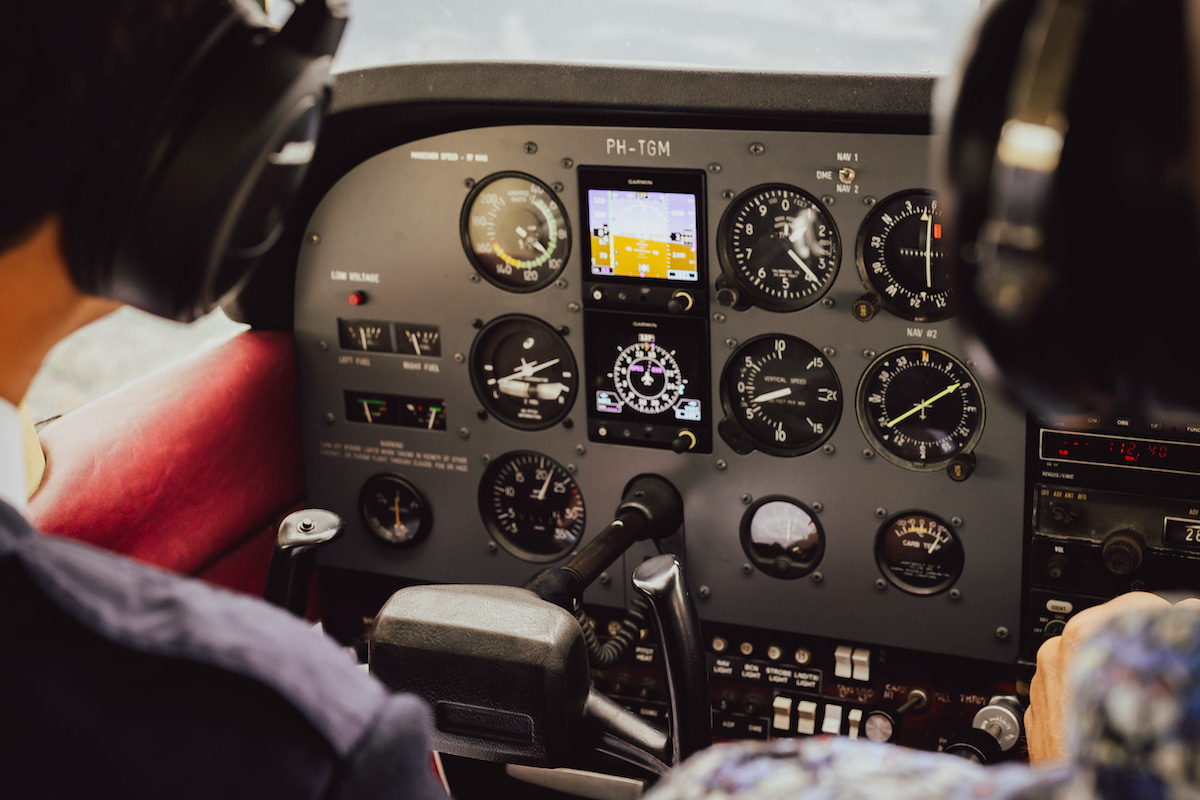
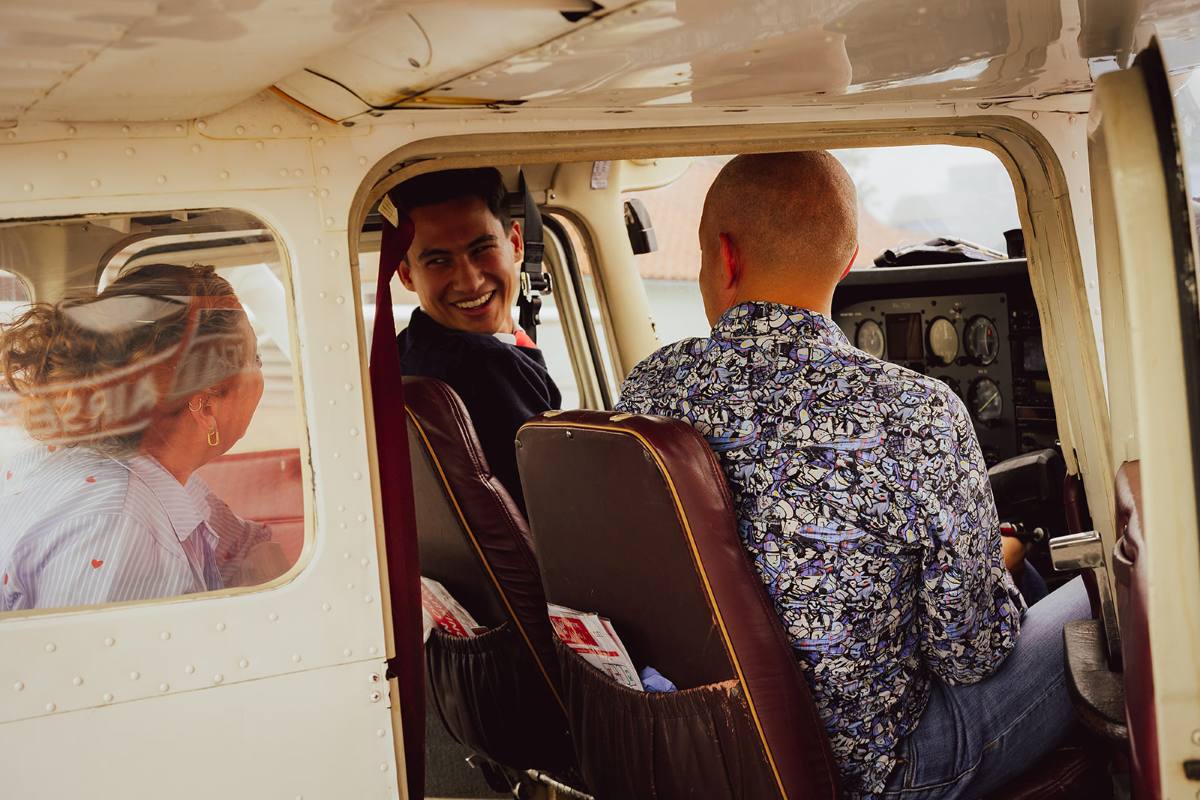
Commercial Pilot License (CPL)
At Special Air Academy in Teuge, we offer a comprehensive Commercial Pilot License (CPL) program designed for aspiring professional pilots. Our experienced instructors provide high-quality training to ensure you meet the highest standards of the aviation industry. Enroll today and take the first step towards a successful career as a commercial pilot!
Flight training starting from
€ 9,325

Rated an average of 9.4
40+ years of experience in aviation
EASA-approved flight school
Flight training
With the Commercial Pilot License (CPL), you are allowed to operate single-pilot aircraft as captain or multi-pilot aircraft as co-pilot on commercial flights. For example, you can perform sightseeing flights or specialized operations with Special Air Services, and you can also be employed as a first officer at an airline.
The CPL training program consists of two phases, namely the VFR and IFR phase, as well as a preparatory program called phase 0. Furthermore, phase 1 is divided into two parts.
The flight training is structured as follows:
- Minimum of 25 hours with a flight instructor
- of which at least 5 hours in a complex aircraft (Piper Arrow)
- of which at least 10 hours basic instrument flight
- of which at least 1 hour Upset Prevention And Recovery Training (UPRT)
- At least a valid Private Pilot License (PPL)
- if you do not yet have a night rating: at least 5 hours of night flying.
Before taking the exam, the student pilot must have at least 200 flight hours, of which 100 must be as pilot-in-command.
Phase 0
Phase 0 takes place before you begin your commercial training. This is also known as the night training. Completing the night training is a requirement for obtaining the Commercial Pilot License. During at least 5 hours of flying, you learn how flying in the dark differs from daytime flying. This includes a solo circuit flight and a cross-country navigation flight to another airport. In addition, you must hold a valid Class 1 medical certificate.
Phase 1A
Phase 1a includes exercises similar to those in the PPL training program. However, the focus here is much more on airmanship, passenger and crew briefings. Passenger comfort also plays an important role. If you have not yet completed a navigation flight of 300 nautical miles (550 km) to two different airports, you will need to do so during this phase. Finally, you will also make a flight with our aerobatic aircraft. The goal of this is to master the basic recovery and prevention techniques.
Phase 2
Phase 2 is known as the basic instrument flight module. During this phase, you learn how to read the instruments in IMC (Instrument Meteorological Conditions) and at the same time how to use navigation points to navigate through IFR airspace. If you continue your training by obtaining the Instrument Rating, you receive full exemption from the basic instrument flight module of the IR course, and vice versa.
Phase 1B
Phase 1b is mainly about preparing for the exam, with one exception. All flights will be conducted with a “complex” aircraft. This means the aircraft has 4 seats, a variable-pitch propeller, and retractable landing gear. You will fly at least 5 hours on this aircraft and conclude with a skill test. It is also possible to fly this complex aircraft already in Phase 1a, or to fly a multi-engine aircraft when combined with an MEP class rating.
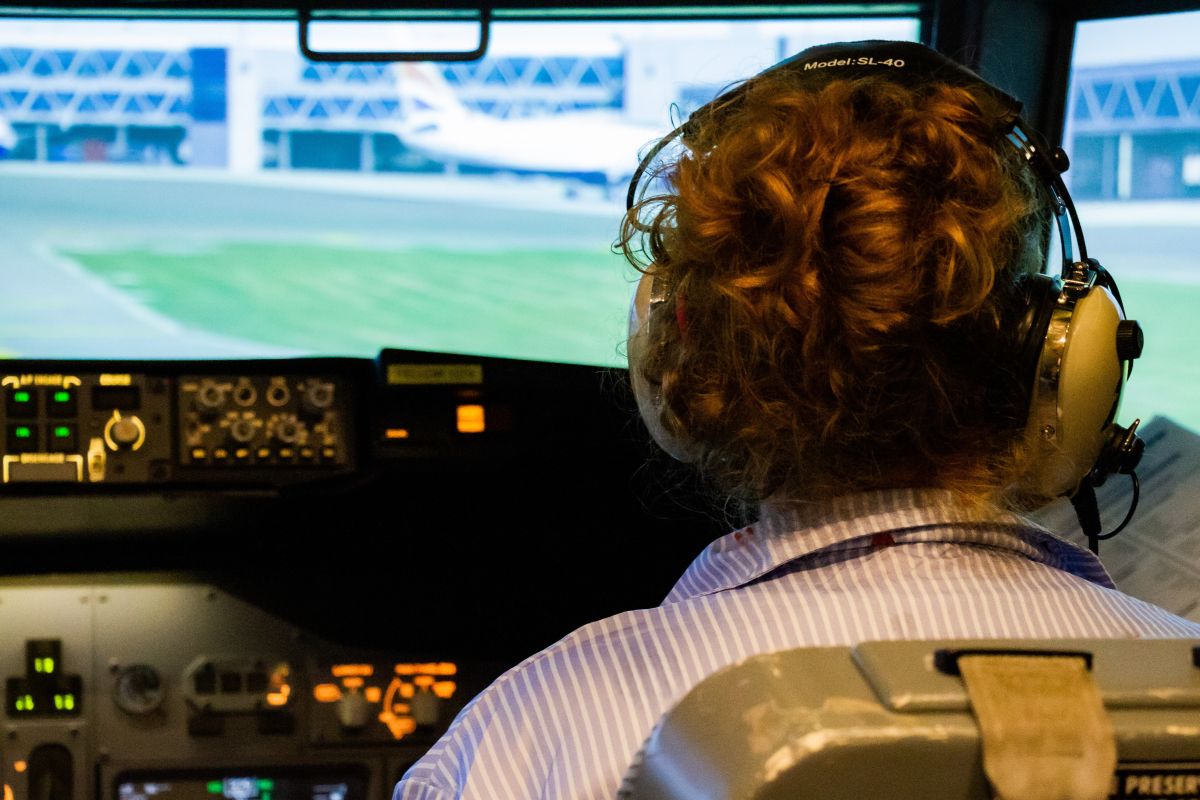
If you cannot fly due to bad weather, this time is used to study theory (aircraft-specific information). It is also possible to prepare future flights or step into the simulator to practice the basics of instrument flying. The time you spend in the simulator does not count toward the hours required to obtain your license; however, it does help you if you unintentionally enter a cloud.
Approved Training Organisation

Complete your flight training CO2-neutral
Special Air Academy and GreenCarbon offer the option to offset the CO2 emissions of your training flights (up to 70.525 kg per hour). This is achieved through certified Dutch projects that plant trees to remove CO2. These forests remain for at least 12 years and are clearly visible from the air, making them suitable targets for your navigation flights. The certificates are registered with ONCRA.org to ensure integrity.

Theory Course
In addition to your flight training, you’ll need to complete the theory course for the Commercial Pilot License. You can choose between two paths, both covering thirteen subjects. If you plan to move on to an Instrument Rating or Airline Transport Pilot License after your CPL, you’ll follow the ATPL theory curriculum. If you’re just aiming for the Commercial Pilot License, the CPL theory is sufficient. Both courses are taught in English and taken online via Orbit Groundschool.
Pricing
Aantal
Vlieguren
25 block hours
€ 5,750
You'll complete 10 block hours on a Cessna 150. For the instrument navigation lessons, you'll spend 10 hours in a Cessna 172 equipped with radio navigation instruments. Then, for the complex aircraft training, you'll fly 5 hours in a Cessna 172RG featuring a constant-speed propeller and retractable landing gear.
Instructie
50 hours
€ 3,050
Landingen
+/- 30 landings
€ 525
The listed rates include VAT. These prices are estimates based on the legal minimum requirements for the practical flight training. No rights can be derived from these guidelines.
Admission requirements
For a CPL(A) license, the student pilot must have completed at least 150 flight hours before starting the training. The minimum age for applying for the license (certificate of competency) is 18 years.